
Blood drawCollected in the clinic

Whole Body Assessment
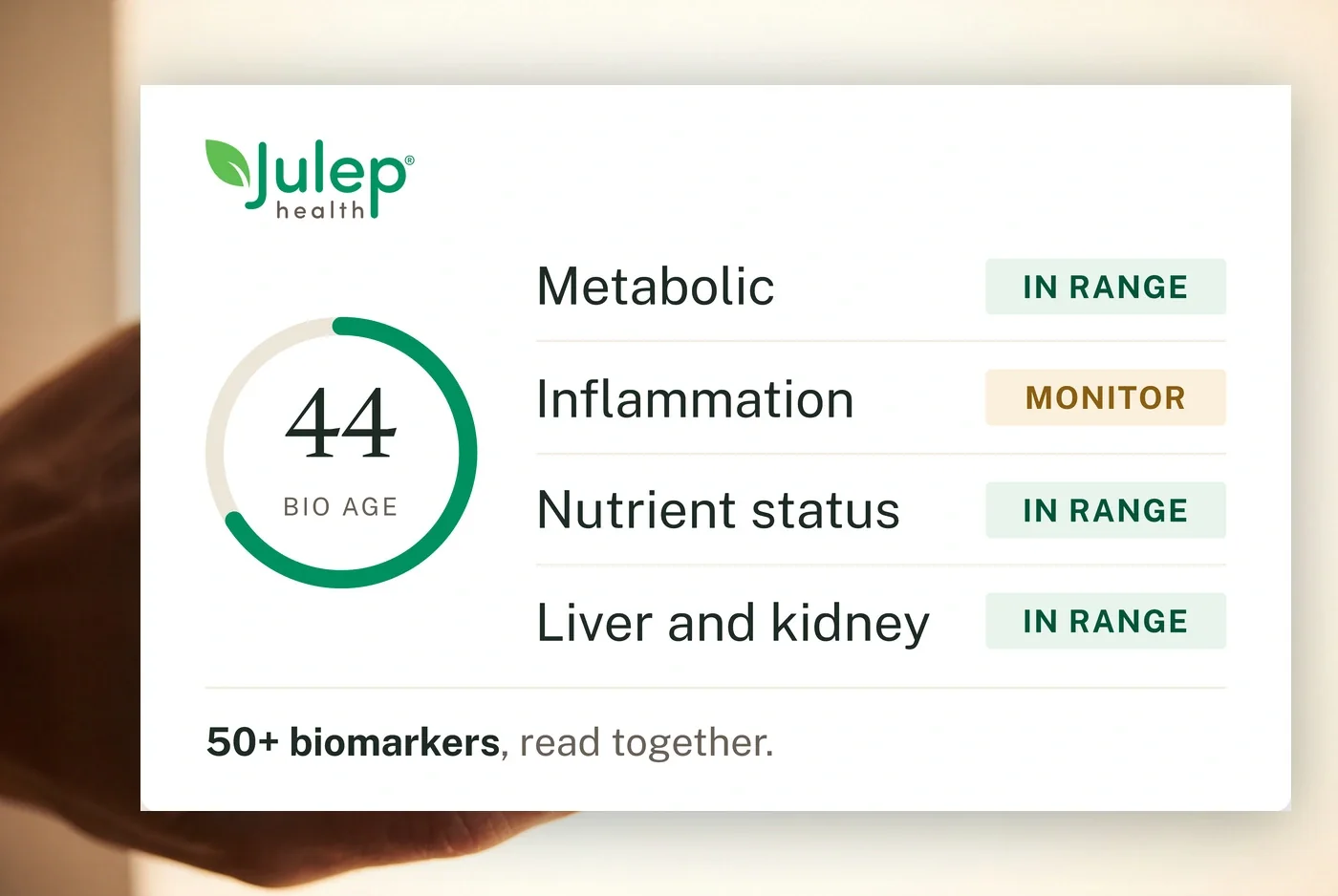
The Whole Body Assessment combines one blood draw, 50+ biomarkers and a full visit with Dr. Briscoe. After the lab work is processed, he reviews the results and your personalized report is posted securely in the patient portal.


What is included
The panel includes 50+ biomarkers across blood health, iron, inflammation, kidney and liver function, cholesterol, blood sugar, thyroid, hormones and key nutrients. It is designed for people who want more context than a routine screening panel provides.
After the lab work is processed, Dr. Briscoe reviews the findings alongside your symptoms, medications, medical history and goals. Your personalized report is then posted securely in the patient portal, with the findings that stand out, what may be worth watching and what may need follow-up. If a specific question needs more investigation, targeted testing can be added.
The process
We start with your history, current concerns and what you want to understand so the assessment has the right clinical context from the beginning.
Your labs are drawn at Julep. We give you any fasting or timing instructions ahead of time, and most results are back within about a week.
Once the labs are complete, Dr. Briscoe reviews the findings and your results and personalized report are posted securely to the patient portal. If a follow-up conversation is needed or requested, it can often be handled by telehealth.

What you receive
Your report organizes the important findings and explains what they mean in context, so you are not left with a long list of numbers and no sense of what matters. It also shows what may need follow-up, what can be monitored and what does not require action.
What we check
The panel spans blood health, metabolism, inflammation, organ function, thyroid, hormones and nutrient status. Open any category to see what is included.

A calculated estimate derived from selected biomarkers. It is an additional point of context, not a diagnosis or a prediction of lifespan.
These markers show whether you have enough healthy red blood cells to carry oxygen and can help sort out common causes of anemia and fatigue.
Iron studies show how much iron is circulating, how much is being carried and how much you have stored. Low ferritin can matter even when other numbers still look normal.
White blood cells and their subtypes can show patterns related to infection, allergy, immune activity and inflammation when interpreted with the rest of your history.
These markers can pick up broader inflammatory activity and are most useful when they are interpreted alongside your symptoms and cardiovascular risk.
Kidney markers help show how well your body is filtering blood and clearing waste.
Electrolytes help us look at hydration, nerve and muscle function, heart rhythm support and acid-base balance.
Liver enzymes and bilirubin can show signs of liver-cell stress, bile-flow problems or other changes that deserve a closer look.
These proteins can add context about nutrition, hydration, liver production and immune activity.
These markers show how your body is handling blood sugar and give us a better look at metabolic health over time.
Cholesterol and triglyceride measurements help us understand how fats are being carried in the blood and what that may mean for long-term cardiovascular risk.
Thyroid and sex-hormone testing can help explain changes in energy, body composition, temperature regulation and other symptoms when the results fit the clinical picture.
Vitamin and mineral levels can matter for nerves, blood health, bones, muscle function, recovery and energy, especially when symptoms or diet raise a concern.
Whole Body Assessment
The Whole Body Assessment goes beyond basic screening by bringing together data across multiple body systems. We look for patterns between metabolic, cardiovascular, inflammatory, hormonal, nutritional and organ-function markers, then interpret those findings in the context of your overall health.
Insurance and logistics
The Whole Body Assessment is a separate service from a routine primary care visit. Some labs may be billed through insurance depending on your plan. Cash pay is also available, and we review the lab billing options before testing.
No. It is a separate service that includes the broader lab panel, a full M.D. visit, physician review and your written report.
Some labs may be billed through insurance depending on your plan. Cash pay is also available. The Whole Body Assessment is $465.
The Julep Whole Body Assessment is a self-pay wellness offering and is not the same as the Medicare Annual Wellness Visit, which we bill to Medicare when clinically appropriate.
Yes. If there is another specific question you want to look at, additional testing from the Julep lab menu can be added when it makes sense.
Yes, when appropriate. Your results and report are available in the patient portal first. If a follow-up conversation is needed or requested, it can often be handled by telehealth.
Whole Body Assessment
Schedule the Whole Body Assessment, or call us and we will help set it up.